A series of lectures on the topic of assistive technologies was held in the Electronics Laboratory on Tuesday, May 12, 2026, as part of the teaching activities for the [Biomedical Electronics] (https://gitlab.com/feeit-freecourseware/biomedical-electronics) course. The workshop involved a number of renowned experts from this field in Macedonia.
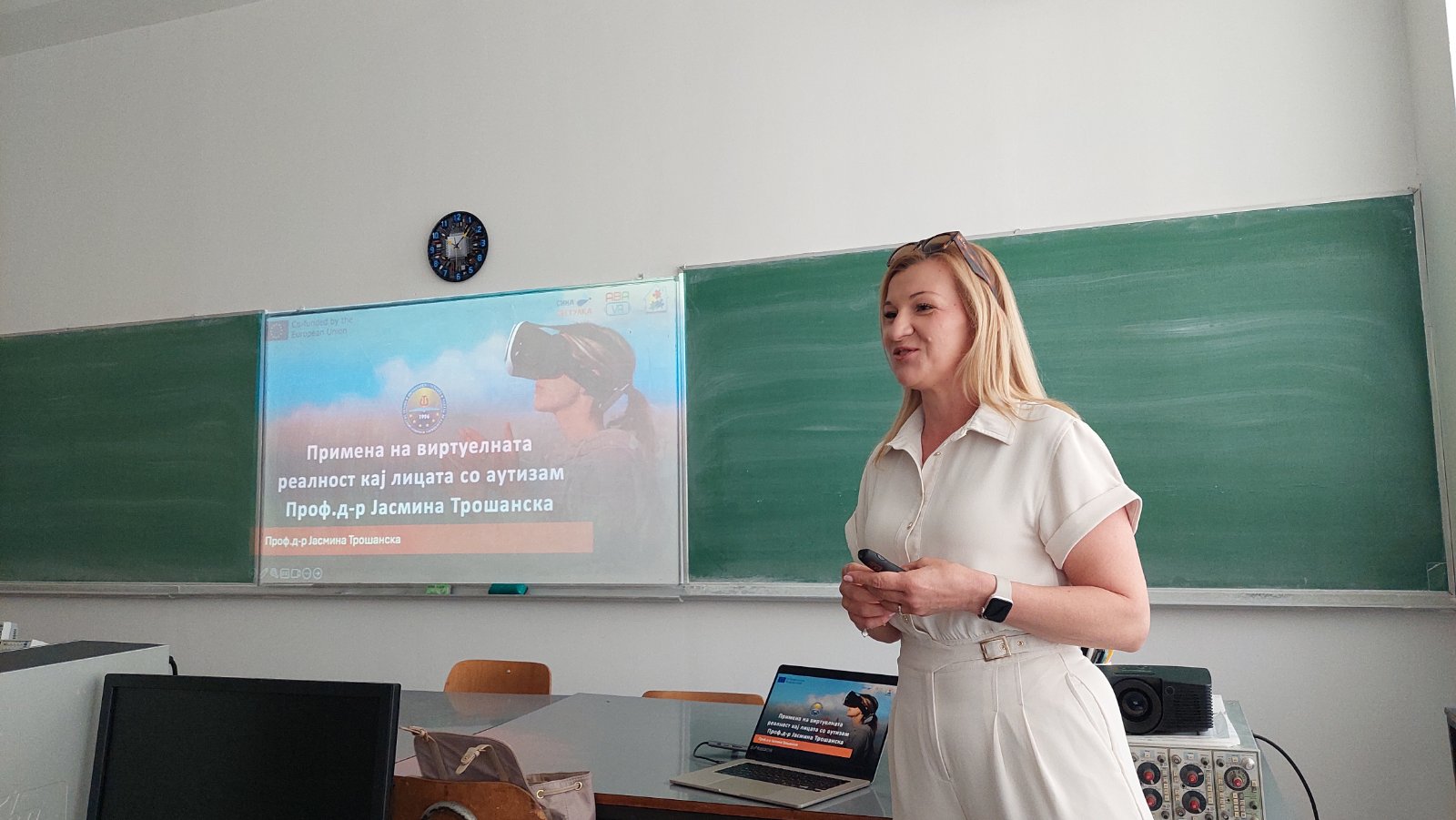
Professor Dr. Jasmina Troshanska from the Faculty of Pedagogy at the State University in Tetovo and president of the Blue Firefly Association for Improving the quality of life of people with Autism Spectrum Disorders spoke about the application of virtual reality for individuals with autism. She presented the results of collaboration with renowned international partners within the ABA-VR projects for training students to support individuals with autism in behavior management using virtual reality, and Houses4Autism which is aimed at supporting people with autism to build their independent living.
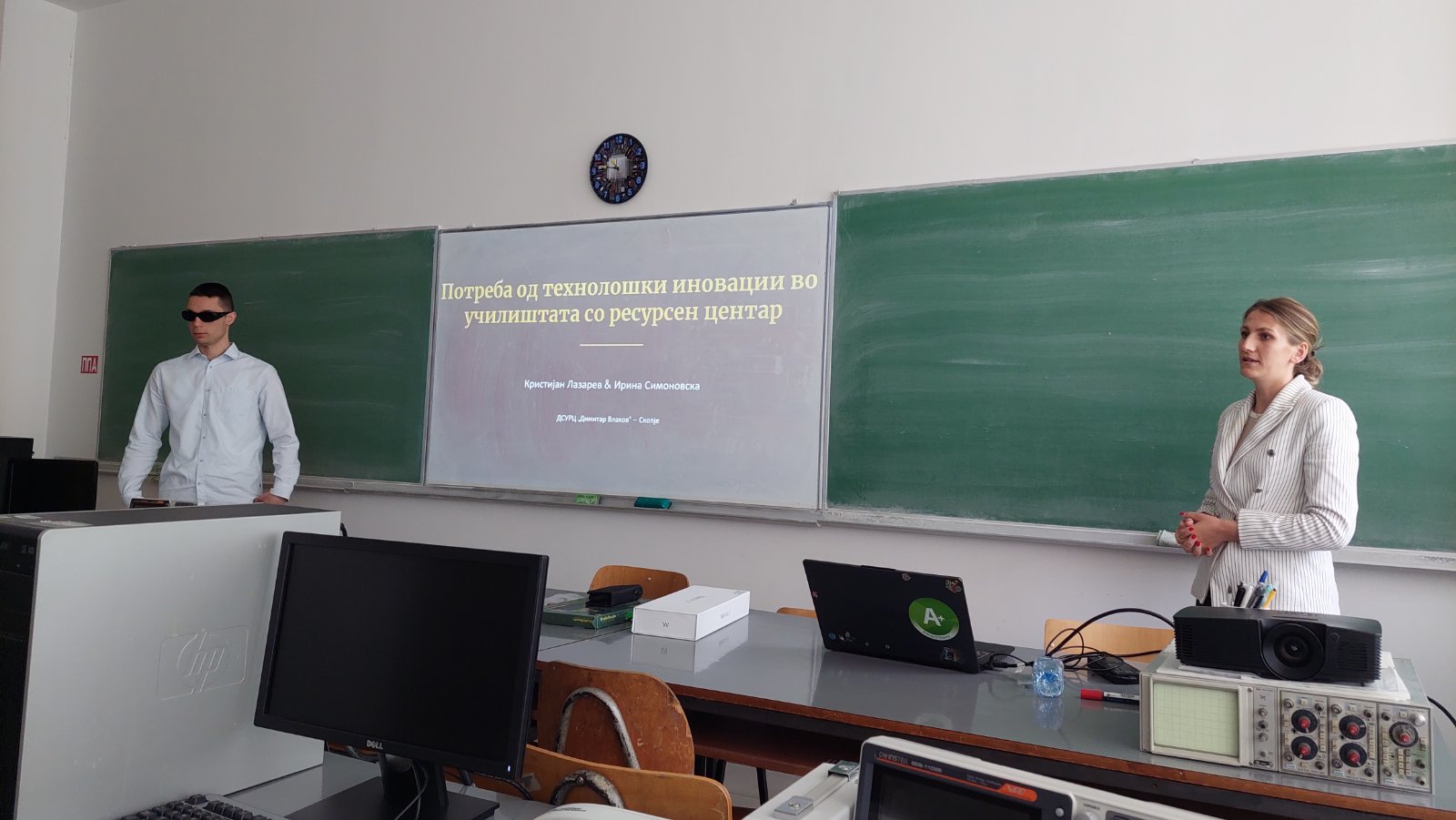
Regarding the needs for technological innovation in schools with resource centers, presentations were given by teachers from the Dimitar Vlahov State School for Children and Youth with Visual Impairment, Irina Simonovska and Kristijan Lazarev, who is also the president of the Association for Accessibility and Inclusion (API). They presented the challenges they face in their daily work, and discussions were held on how FEEIT students can contribute to the directly applicable development of assistive technologies.
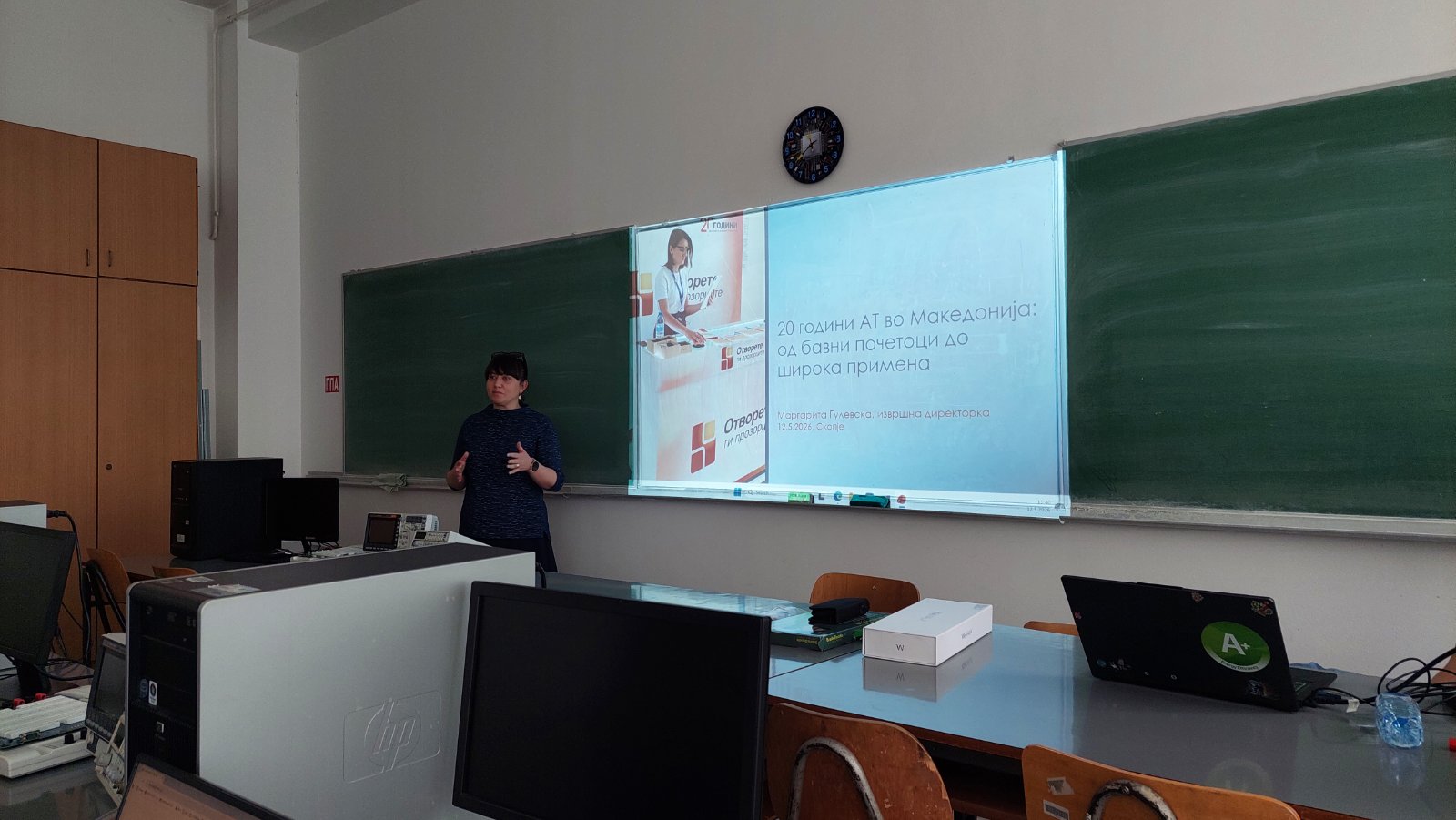
Margarita Gulevska and Danche Todorovska from the Association for assistive technology Open the Windows spoke about the development and accessibility of assistive technologies in Macedonia. They provided direct examples of how FEEIT students and staff have made significant contributions to the development of assistive technologies in collaboration with their association in the past, primarily the free speech synthesis voice in Macedonian [Suze] (https://speech.feit.ukim.edu.mk/tts_suze.html) and the [assistive keyboard] https://github.com/FEEIT-Assistive-Technologies/Assistive-keyboard) for users with motor disabilities.
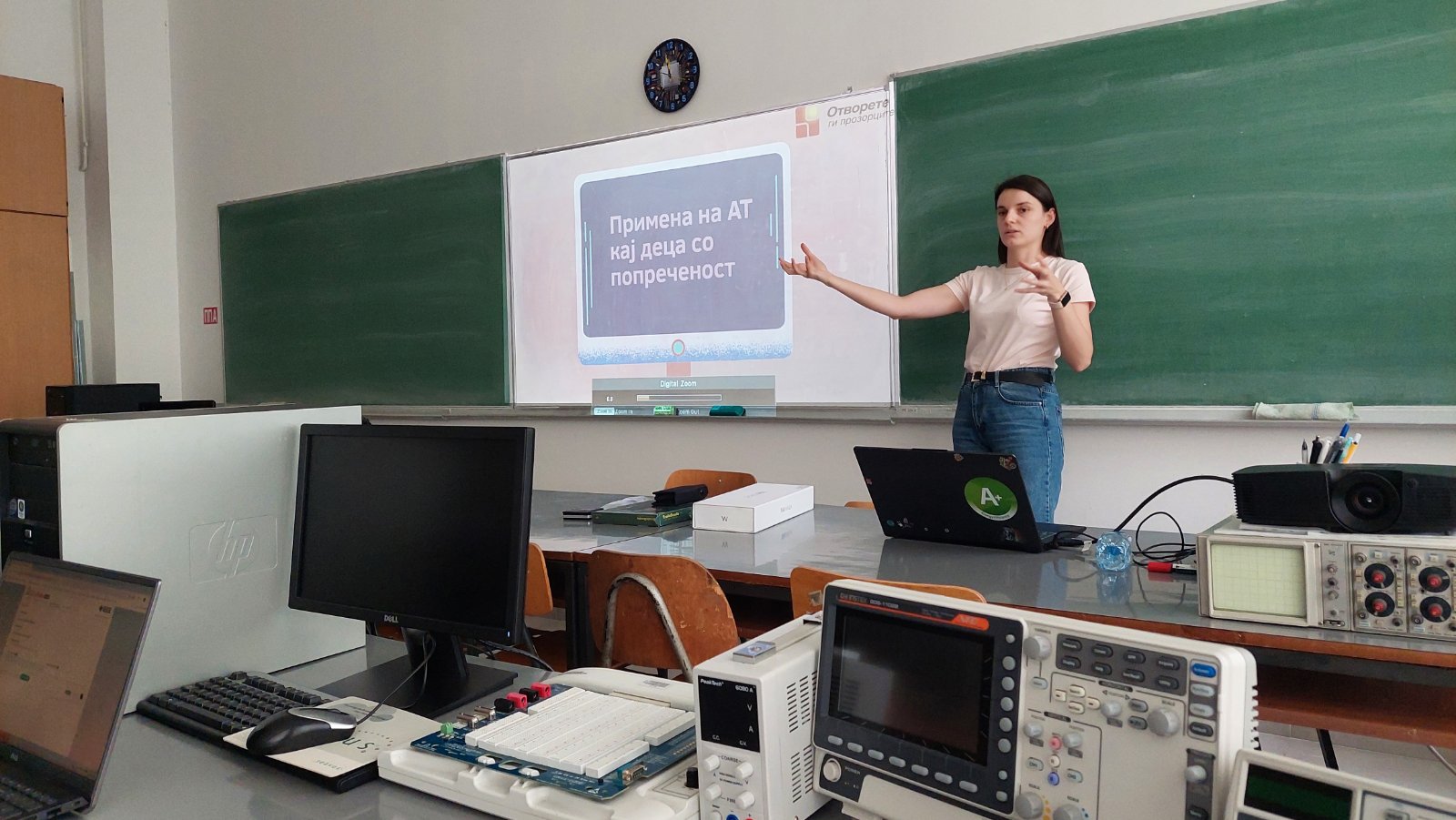
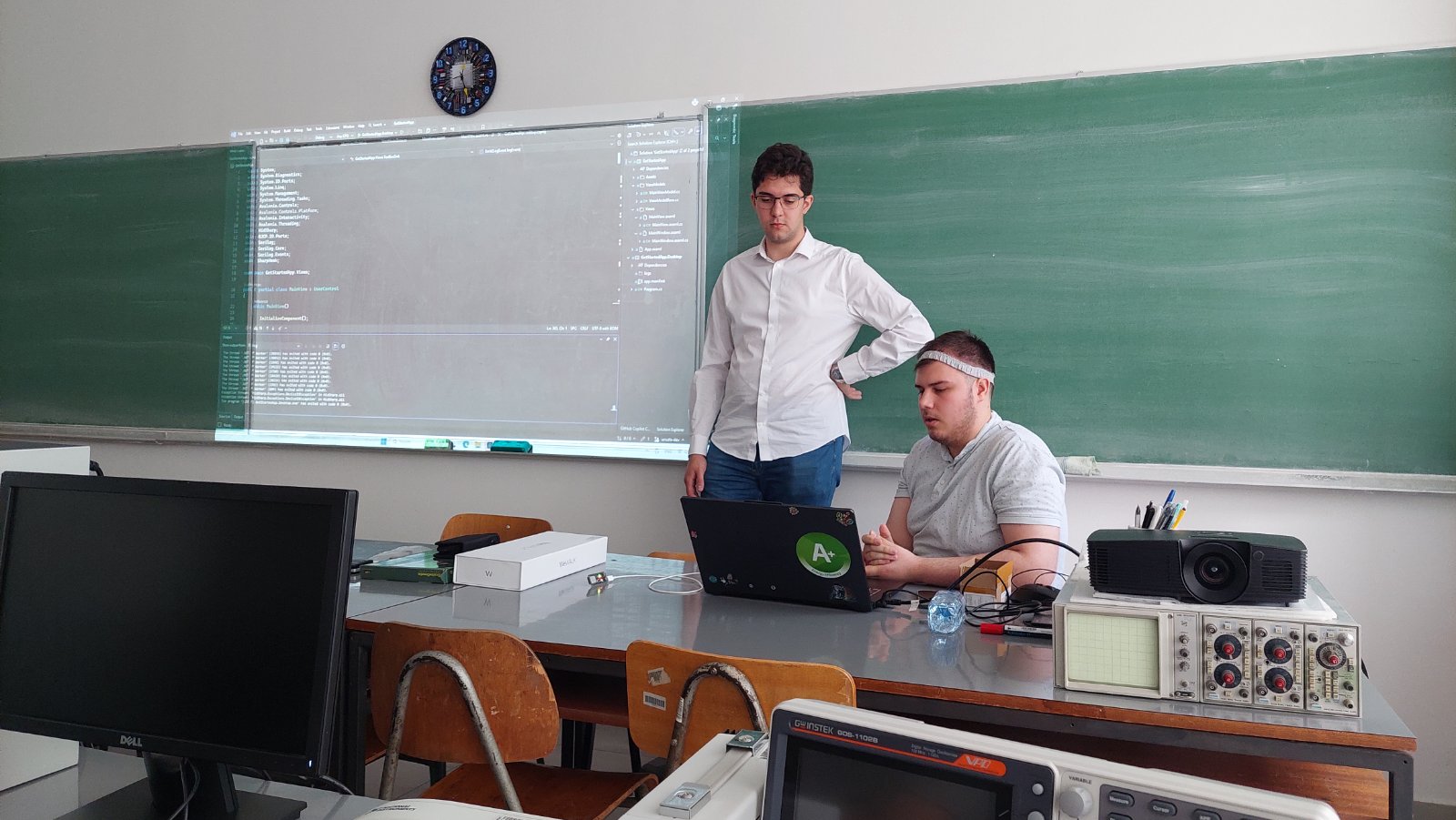
At the end, colleagues Martin Milchevski and Luka Damjanov, students at FEEIT, presented their ongoing work on a device for computer use by individuals with quadriplegia through head movements called the [gyromouse] (https://github.com/FEEIT-Assistive-Technologies/gyromouse).
The lecture series was supported by the Macedonia section of IEEE through its chapters: the Joint Signal Processing and Engineering in Medicine and Biology Society (SP/EMB), the Joint Electron Devices, Instrumentation and Measurement, and Solid-State Circuits Society (ED/IM/SSC), as well as the IEEE Life Members Affinity Group (LM80077).